Okay, so I'm late (as usual) starting my Advent observances. I should have started on time on December 1st. But late is better than never. Advent has come to mean so much to me, in the past few years, that I find it more and more important each year to observe this season.
The word Advent means "the coming" or arrival. And what greater arrival than the Christ-child's appearance on Christmas Day so long ago? But somewhat ironically, the period of Advent comes before the Arrival. It is in fact, not about the actual arrival but about the stretch of time spent waiting for Him.
Waiting in our time and culture is not glorified. I watched a recent Colbert Report (Monday, Dec. 2) where he mocked the Amazon Overnight Delivery service. "It takes FOREVER. If I have to wait until tomorrow for my items to arrive, there goes tonight's plans..." he mock-complained. He then went on to describe Amazon's plans to potentially adopt delivery service by drones - that would cut down the delivery time to half an hour. Yes, he was only complaining in jest, but I find I have the same problem - I have no patience with anything that makes me wait. For example...
Mail: Just this Sunday, I was griping because the Advent candles that I ordered 11 days prior (with free shipping of course) had not arrived by Dec. 1 in time to use them for our first Advent service of the year.
Traffic: I hate being stuck behind a slow car and make frequent lane changes.
Family: I get annoyed when I am dressed to go out, and my husband isn't ready yet.
Lines: I pick late nights to go shopping because I know there won't be any queues.
But God, in His infinite wisdom, created the world and then proceeded to endure thousands of years of man's forgetfulness, betrayal and folly, before sending a Savior. He waited patiently for us to remember, for us to turn back to Him. And He is waiting still. Sometimes I wonder why He waited so long when the world was in darkness. Even so, the Christ-child was born at exactly the right time ("But when the set time had fully come, God sent his Son" - Galatians 4:4)
Is there something you are waiting for in your life? Do you know why God is keeping you waiting? What does He want you to do with your time while you wait?
Wednesday, December 4, 2013

Monday, November 25, 2013
Hostess: The first face we see
As part of my job, I design the flow of our worship service, including scheduling everyone involved. One of the very important jobs is person who introduces the service, or in non-church terms, the MC. At Southbay, we call them Hostesses - we've chosen to have mainly women fill this role, since we mostly have men preaching and it's nice to see a variety of faces up there.
Recently, one of our hostesses brought up some good questions which really made me think through the "whys" and "hows" behind hosting. Here are some of my answers to those questions... feel free to add your thoughts.
1. What's the real purpose of hosting for Sunday Worship?
The purpose is to create a clear "flow" so that the congregation and newcomers will understand what is happening next. Also, as a hostess, you are the "face" of the church. Most people feel they cannot relate to a pastor, but they see an ordinary person up there being warm, friendly and welcoming them and they get a feel for how our church is.
2. Are there any techniques you recommend to begin the worship?
To begin the worship, the purpose of the host should be to gather people's attention and focus it on God (aka "call to worship")
I have seen some different techniques from hosts that I think are helpful in different ways. For example, reading a very short Scriptural "call to worship" (For example, Psalm (95:1, 95:2 or 95:6, Psalm 66:1, etc.)
OR
Relating to some current event (say we are in mourning for something or happy about something)
OR
Relating to today's theme. For example, our current sermon series is on Hope. You could say something like, "Good morning everyone. In this month's sermon series, we have been hearing about the Hope that Jesus gives us. Let's stand and worship Him, and remind our hearts to be hopeful." Something like that.
Just from a Google search, I found an eHowarticle with some helpful tips at the end (from an unnamed eHow contributor):
Read more: http://www.ehow.com/how_5359076_perform-call-worship.html#ixzz2lhv6ybbB
3. What are some ways to welcome newcomers without asking them to stand up to make them feel uncomfortable?
Also as a host, you can invite newcomers to our post-service snack/mingle time, saying something like, "If you are new this Sunday, we would love to get to know you, and the best time for that is to join us upstairs for food and conversation right after service."
Please feel free to add your own ideas.
Have a great Thanksgiving week!
Recently, one of our hostesses brought up some good questions which really made me think through the "whys" and "hows" behind hosting. Here are some of my answers to those questions... feel free to add your thoughts.
1. What's the real purpose of hosting for Sunday Worship?
The purpose is to create a clear "flow" so that the congregation and newcomers will understand what is happening next. Also, as a hostess, you are the "face" of the church. Most people feel they cannot relate to a pastor, but they see an ordinary person up there being warm, friendly and welcoming them and they get a feel for how our church is.
2. Are there any techniques you recommend to begin the worship?
To begin the worship, the purpose of the host should be to gather people's attention and focus it on God (aka "call to worship")
I have seen some different techniques from hosts that I think are helpful in different ways. For example, reading a very short Scriptural "call to worship" (For example, Psalm (95:1, 95:2 or 95:6, Psalm 66:1, etc.)
OR
Relating to some current event (say we are in mourning for something or happy about something)
OR
Relating to today's theme. For example, our current sermon series is on Hope. You could say something like, "Good morning everyone. In this month's sermon series, we have been hearing about the Hope that Jesus gives us. Let's stand and worship Him, and remind our hearts to be hopeful." Something like that.
Just from a Google search, I found an eHowarticle with some helpful tips at the end (from an unnamed eHow contributor):
Greet the congregation with a smile and a confident movement toward worship rather than a bland 'Good morning.' The first words should be more than casual greetings...this is a worship service.
Project your voice with breath support from the diaphragm and speak with a smile.
Raise the arms and turn up the palms in a welcoming gesture during your last sentence of invitation to worship.
Calls to worship are not long affairs. Avoid the long winded introduction.
If you are reading a call to worship avoid the reading voice with its downturned towns and predictable rhythms. Practice reading the call to worship well enough that it lives and breathes.
Don't think you can avoid the call to worship. Whatever is spoken first (outside of song) in a service is the call to worship. So craft it well.
Read more: http://www.ehow.com/how_5359076_perform-call-worship.html#ixzz2lhv6ybbB
3. What are some ways to welcome newcomers without asking them to stand up to make them feel uncomfortable?
As a background, we don't have newcomers stand up in our congregation. Too often, that makes people feel like there's a lot of unwanted attention. But we do have a greeting time part-way through the service and many hostesses encourage people to talk with those they don't know.
Also as a host, you can invite newcomers to our post-service snack/mingle time, saying something like, "If you are new this Sunday, we would love to get to know you, and the best time for that is to join us upstairs for food and conversation right after service."
Please feel free to add your own ideas.
Have a great Thanksgiving week!
Monday, October 28, 2013
God on our side
The Psalms are full of quotes about having The Lord on our side. Now, I'm sure that imagery means a lot to those who are actually fighting a war... but what about those of us who are civilians and whose Great Challenges consist of fighting a stubborn zit, or trying to hold our tongues when someone says something that makes us bristle?
A few weeks ago, I was lying in bed, trying to shake a bout of sickness. It was in this state of forced reflection and stillness that I have been reminded of the Enemy we all face - and the great Grace of God who is on our side.
That day, I had planned two appointments to meet with youth. Then I got sick. Not the type of sick where you sniffle a bit, but don't notice most of the time. It was the full-out lying-on-your-back-in-bed-because-else-you'll-have-a-splitting-headache type. Instead of calling up the kids to cancel like I should have done, I instead planned to suffer through it, martyr-like. It's my own twisted sense of reasoning: I hate it when people cancel on me, so I never want to be the one who cancels on someone else.
Well, that's when God stepped in. I checked my Facebook to confirm plans to meet up with the first one - and found she had cancelled due to other school plans. Normally this would have made me frustrated, but I gratefully accepted it this time.
Then, around 12pm, I received a phone call from the other one, calling on his lunch break: Hello. Do you still want to meet up today or do it another day?
For a split second, I thought about keeping stubbornly to our previous plans, like a soldier who has been dismissed but doggedly stays at his post. Then, common sense won out.
Me: Um, actually, I'm really sick right now. Can we meet up next week?
He readily agreed, and God's Grace won out over my stubborn pride.
See, the Enemy doesn't always show up in obviously evil ways such as child prostitution or bullying. Most often, we encounter sin's temptation in the self-sufficient attitude or the snarky remarks we make to loved ones. These are the battles we all face everyday. And The Lord is on our side. He is there whispering a gentle reminder to hold our tongues, or giving us a way to remain patient under criticism, or, in my case, providing a way that I didn't have to let anyone down by cancelling appointments, but still enabling me to get the rest I needed. Small things that could be coincidences... but then again... maybe they aren't.
Let's all look for ways that He is on our side today.
Tuesday, May 14, 2013
I'm Sorry
Have you ever noticed how much easier it is to graciously forgive someone when they have already said those magic words: "I'm sorry"?
Recently, I had a humbling interaction with a client. She let me know late that her daughter would not be attending an event which we had be preparing for over the past six weeks. I sent back a rather severe email letting her know that she should have informed me earlier.
After sending the email, I had a fit of conscience. That is, God tapped me on the shoulder and reminded me that I should have been nicer. I regretted using such a strong reprimand, but since the email had already been sent I couldn't do much about it.
Later that day, I received a reply. The woman began her email, "I'm really sorry about the poor communication on my side." She went on to say that her mother had been sick all year and that she had not been able to commit to anything else since she was spending all her time taking care of her mom.
Imagine what a jerk I felt when I read that. She not only took responsibility, but she had a very good excuse for her actions which entreated my compassion. I sent her back a very gracious reply, letting her know that it was okay, that I understood, that I should have confirmed with her earlier, and I wound up saying that I would pray for her and her mother.
But as I stepped away from the computer, I was very disturbed to examine my heart. Yes, I had quickly forgiven this woman after she had admitted her fault and offered to make amends. But it was her apology which had made me feel like I could be magnanimous. I felt like the Royal Ruler who had been Justly Offended, and she was the Poor Serf kneeling before me in abject humiliation - it was easy to forgive her, with a wave of my lordly hand!
But what if she had been defensive, blaming me instead for the poor communication? Would I then have pushed away the guilt I felt for treating her somewhat harshly? Would I have been able to admit my own poor communication? I'm not sure, and I'm glad I didn't have to find out. But it wasn't a pretty sight to look deep into my own motives and realize that they're not always as pure as I would like to believe.
Romans 5:8 says, "God demonstrates His own love for us in this: while we were yet sinners, Christ died for us."
I just finished watching The Bible series on the History channel. Great series. It summarizes the stories of the whole Bible into a few hours. But what I appreciated most was seeing the story of Jesus come to life. Finally I had a picture of what Isaiah meant when he said about Jesus: "He was despised and rejected of men; a man of sorrows, and acquainted with grief..." (Isaiah 53:3). In the last moments of His life, Jesus asked His Father to forgive those who had mocked him, spit on him, crucified him. Even though they had never admitted their guilt or shown any remorse.
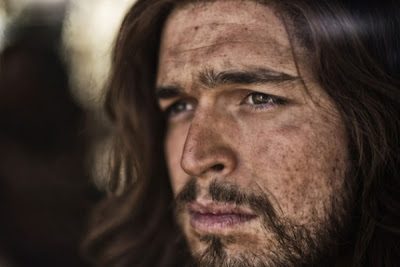
I find it really hard to wrap my mind that kind of love. A totally selfless love which does not receive and yet keeps on giving itself totally. And yet it seems to me that if I could let go of needing to hear others' contrition, I might be able to feel a little more remorse myself. Then I would truly understand what my salvation cost my Lord.
Oh Lord. Forgive us our sins, as we forgive those who sin against us. Even when they don't say, "I'm sorry."
Recently, I had a humbling interaction with a client. She let me know late that her daughter would not be attending an event which we had be preparing for over the past six weeks. I sent back a rather severe email letting her know that she should have informed me earlier.
After sending the email, I had a fit of conscience. That is, God tapped me on the shoulder and reminded me that I should have been nicer. I regretted using such a strong reprimand, but since the email had already been sent I couldn't do much about it.
Later that day, I received a reply. The woman began her email, "I'm really sorry about the poor communication on my side." She went on to say that her mother had been sick all year and that she had not been able to commit to anything else since she was spending all her time taking care of her mom.
Imagine what a jerk I felt when I read that. She not only took responsibility, but she had a very good excuse for her actions which entreated my compassion. I sent her back a very gracious reply, letting her know that it was okay, that I understood, that I should have confirmed with her earlier, and I wound up saying that I would pray for her and her mother.
But as I stepped away from the computer, I was very disturbed to examine my heart. Yes, I had quickly forgiven this woman after she had admitted her fault and offered to make amends. But it was her apology which had made me feel like I could be magnanimous. I felt like the Royal Ruler who had been Justly Offended, and she was the Poor Serf kneeling before me in abject humiliation - it was easy to forgive her, with a wave of my lordly hand!
But what if she had been defensive, blaming me instead for the poor communication? Would I then have pushed away the guilt I felt for treating her somewhat harshly? Would I have been able to admit my own poor communication? I'm not sure, and I'm glad I didn't have to find out. But it wasn't a pretty sight to look deep into my own motives and realize that they're not always as pure as I would like to believe.
Romans 5:8 says, "God demonstrates His own love for us in this: while we were yet sinners, Christ died for us."
I just finished watching The Bible series on the History channel. Great series. It summarizes the stories of the whole Bible into a few hours. But what I appreciated most was seeing the story of Jesus come to life. Finally I had a picture of what Isaiah meant when he said about Jesus: "He was despised and rejected of men; a man of sorrows, and acquainted with grief..." (Isaiah 53:3). In the last moments of His life, Jesus asked His Father to forgive those who had mocked him, spit on him, crucified him. Even though they had never admitted their guilt or shown any remorse.

I find it really hard to wrap my mind that kind of love. A totally selfless love which does not receive and yet keeps on giving itself totally. And yet it seems to me that if I could let go of needing to hear others' contrition, I might be able to feel a little more remorse myself. Then I would truly understand what my salvation cost my Lord.
Oh Lord. Forgive us our sins, as we forgive those who sin against us. Even when they don't say, "I'm sorry."
Sunday, March 17, 2013
How teens show love
I got my first job as Youth Director in 2010. Before that, I was a youth counselor, youth intern, whatever you want to call it. No one really cared what my title was; all it meant was that I hadn't graduated seminary yet. When I became a Youth Director, suddenly, it felt like a big deal.
The most noticeably cushy part of the job, admittedly, was the big shiny gold nameplate by my office door:
My Name
Youth Director
For the first few weeks, it felt good to walk past my door and glance at it. Surely, such an imposing nameplate meant that I was a Very Important Person, a person of whom to Take Note, a person whom all the youth would assuredly Respect and Love.
Until one day.
It was late on a Sunday afternoon. I had been doing some work at my desk after church, and the youth had been playing around outside the office door. I knew they were probably up to something, but I've learned sometimes it's better to pretend to be deaf if you don't want to be disturbed. I finally wrapped up and went outside. The kids had long finished and gone downstairs, and as I turned to shut and lock my door, I glanced as a matter of habit, at my precious nameplate.
Only now, it didn't read "Youth Director." It read:
Youth Dictator
All my carefully-built illusions of being a Very Important Person came crashing down in an instant. I wasn't a hero, a beloved leader to my subjects... I didn't inspire Respect and Love. I didn't have their undivided admiration. In that moment, I saw myself how they saw me: a dictator. Sigh.
* * *
Well, the dictator thing went dormant for awhile. But dormant doesn't mean dead. The following year, on Counselor Appreciation Day, they made me a big red flag with a yellow Communist symbol on it. They hung it up on the youth room (I must remember to take that down before newcomers doubt the affiliation of our church).
This past summer, we went on a week-long mission trip to Idaho. During the first day on the road, we stopped to relax at a river, and most of the kids went wading and swimming. I remember asking one of my co-leaders, "Am I being too strict?" (This was after forbidding them to cliff-dive and, incidentally, right before one of them sliced her foot open in the river). "Nooo..." he replied hesitantly, "You're just... protective..."
This past summer, we went on a week-long mission trip to Idaho. During the first day on the road, we stopped to relax at a river, and most of the kids went wading and swimming. I remember asking one of my co-leaders, "Am I being too strict?" (This was after forbidding them to cliff-dive and, incidentally, right before one of them sliced her foot open in the river). "Nooo..." he replied hesitantly, "You're just... protective..."
Well, I tried to lighten up a bit after that, but it was no use. Shortly afterward on the trip, I somehow acquired the nickname: Mama Stalin. And groan as I might, it stuck.
* * *
Fast-forward to a few weeks ago. My commissioning ceremony as a youth minister, a very big and exciting deal in my professional life. My parents were there, my in-laws were there, and several of my good friends came to cheer and support me. It was a very special ceremony and I felt loved and cared for. After the service, we were getting ready to be seated at the luncheon, when my beloved kids come up and present me with this:
[picture of the whole board]
[zoom in on tasks for the day]
Ah well. Nothing like kids for taking you down a peg or two. And looking at that noticeboard, I finally shrugged and gave up. I was fighting the nickname because I didn't want to be seen as ridiculous. But I finally realized... the very fact that I'd been given the nickname meant they loved me. I just needed to learn to recognize it as love.
* * *
I was reminded once more this past week. Wanting to show my student leaders how much I care about them, I mailed them some encouragement notes. On Friday, at youth group, one of them approached me.
Student: Hey Joni, guess what?
Me: What?
Student: Today, my mom told me to go outside and get the mail. Then, just as I did, I saw a big guy open our mailbox and grab it all! I thought about chasing him, but I saw how big he was and decided against it.
Me: Hm, sorry, that sucks.
Student: Well, Joni. I did see there was this blue envelope sticking out of the pile... too bad that guy stole all our mail. I hope it wasn't anything IMPORTANT.
Me: (finally catching on) Ohh... yeah, no... probably not. :)
You learn not to fight back. Just smile and say, "You're welcome."
Because, in their language, that's their way of saying thanks.
Wednesday, February 13, 2013
The Christ of Calvary
"He who knows not the Christ of Calvary knows not God, and he who does not thus know, knows not anything that is worth knowing." --R.E. March
It's Ash Wednesday today; the first day of Lent. (If you don't really understand what Lent is, you can read some background here.) Every year during Lent, I try to spend time reflecting on the suffering of Jesus. One book I have found particularly helpful is Contemplating the Cross by Tricia McCary Rhodes. For 40 days of readings, you walk with Jesus through his journey to the cross and think about his experience. More than anything else, this book has helped me understand and draw nearer to the one who was both God and man.

Today I'm thinking about the quote from Day 1 of the readings, which I have written above. What really struck me this time is the first part: "He who knows not the Christ of Calvary knows not God".
Who is the Christ of Calvary? In the last days before Jesus' death, we see glimpses of him that we have never seen before...weeping, afraid, lonely... but buoyed up by some inner strength through which he remains silent when mocked and tortured... and finally, asks God to forgive his murderers right before he dies. To be honest, these are not scenes I like to play in my head. It makes me nervous, uneasy, to think of Jesus crying and afraid. I'm scared to look into the depths of the evil he had to face or feel the strength of the taunts which he bore humbly. And most of all, I dare not face my own vile sin which lurks there, mixed in the cup of bitterness which he had to drink.
But in facing these images, in replaying them in my head, and in worshiping the One who was greater than the evil he faced, I find that I begin to understand who God really is. God is not an impersonal Judge taking down notes of my every action, or even a Amazon shipping agent, fulfilling my orders as I send them in. He's not even just a sweet old Father who is always ready to give me a hug and kiss my bruised knee. God experienced pain, loneliness and fear, just as we do. Instead of remaining aloof from our sin and darkness, Jesus took it and wrapped it round himself like a cloak. Man of sorrows and despised by many... yet taking the sin of the world upon his shoulders. This is the real God... and I long to know him.
It's Ash Wednesday today; the first day of Lent. (If you don't really understand what Lent is, you can read some background here.) Every year during Lent, I try to spend time reflecting on the suffering of Jesus. One book I have found particularly helpful is Contemplating the Cross by Tricia McCary Rhodes. For 40 days of readings, you walk with Jesus through his journey to the cross and think about his experience. More than anything else, this book has helped me understand and draw nearer to the one who was both God and man.

Today I'm thinking about the quote from Day 1 of the readings, which I have written above. What really struck me this time is the first part: "He who knows not the Christ of Calvary knows not God".
Who is the Christ of Calvary? In the last days before Jesus' death, we see glimpses of him that we have never seen before...weeping, afraid, lonely... but buoyed up by some inner strength through which he remains silent when mocked and tortured... and finally, asks God to forgive his murderers right before he dies. To be honest, these are not scenes I like to play in my head. It makes me nervous, uneasy, to think of Jesus crying and afraid. I'm scared to look into the depths of the evil he had to face or feel the strength of the taunts which he bore humbly. And most of all, I dare not face my own vile sin which lurks there, mixed in the cup of bitterness which he had to drink.
But in facing these images, in replaying them in my head, and in worshiping the One who was greater than the evil he faced, I find that I begin to understand who God really is. God is not an impersonal Judge taking down notes of my every action, or even a Amazon shipping agent, fulfilling my orders as I send them in. He's not even just a sweet old Father who is always ready to give me a hug and kiss my bruised knee. God experienced pain, loneliness and fear, just as we do. Instead of remaining aloof from our sin and darkness, Jesus took it and wrapped it round himself like a cloak. Man of sorrows and despised by many... yet taking the sin of the world upon his shoulders. This is the real God... and I long to know him.
Thursday, February 7, 2013
The Tenants
There's an interesting thing about God's Word. It was written to tell God's story, but though many of the events have already happened, God still uses it to speak to us today.
I recently re-read The Parable of the Tenants from Matthew 21:33-46. It's an engaging story which tells of the man who rented out his vineyard to some tenants. When it came time to harvest the grapes, he sent messengers to ask the tenants for his share of the crop. But they refused to give him the fruit and beat and killed all his messengers. The owner only had one way to gain control of his vineyard. He sent his own son, since who could disrespect the man's son himself? But the tenants said to one another, "Come, let's kill him and take his inheritance." So they killed even the owner's son. Enraged, the owner came and avenged his son and rented his vineyard to other tenants who would give him his rightful share at harvest time.
The context and meaning of the story is pretty clear. Jesus is indicting the religious people of the time who failed to produce spiritual fruit -- they failed to worship God and offer up their lives to him, instead planning to kill God's own son. Jesus was saying that God would cut off all the religious people who thought they were his children and instead welcome newcomers into his family.
But how about this passage's application to us today?
I grew up in church, going to Sunday School every week. I knew all the books of the Bible in order, and if you asked me about any character in the Bible, I could tell you his or her story. I knew who Jesus was and why he came to earth and died. But in a sense, I was just like these tenants of the vineyard. I was lazy. I wanted the inheritance of "getting into heaven" but I didn't want to do the hard work of producing fruit in my life. Though I claimed to worship God's Son Jesus, did I recognize him when he came into my life and wanted to change me? Though I claimed to be a Jesus-follower, I was probably more like the religious people whom he condemned.
Jesus says that "the kingdom of God will be taken away from you and given to a people who will produce its fruit."
Do we Christians think enough about the opportunity that we already have to be God's children? Or do we take it for granted? Are we excited about talking to Jesus, learning from him, growing to be more like him? Or do we just go through the motions that we have come to know and be comfortable with: going to church, saying the right words, pretending that we read the Bible and pray...?
I have teens in my youth group who look just like I did as a teenager: going through the motions, so sure of heaven that they don't think about how they will serve God on earth. But I also have teens who realize what an amazing opportunity God has given them; they are excited, they are searching for God, they are grabbing for any opportunity possible to know more about him, and it is these students who will really experience God working in them in a personal way.
And you...? Which one are you? Are you the old tenant who gets thrown out of the vineyard or will you be the one who will produce fruit?
Subscribe to:
Posts (Atom)